Frozen and Burst Pipes on the Plains: What to Watch For and What to Do First
By the time you can see the damage, the water's usually been moving for a while.
September 9, 2026 · 4 min read
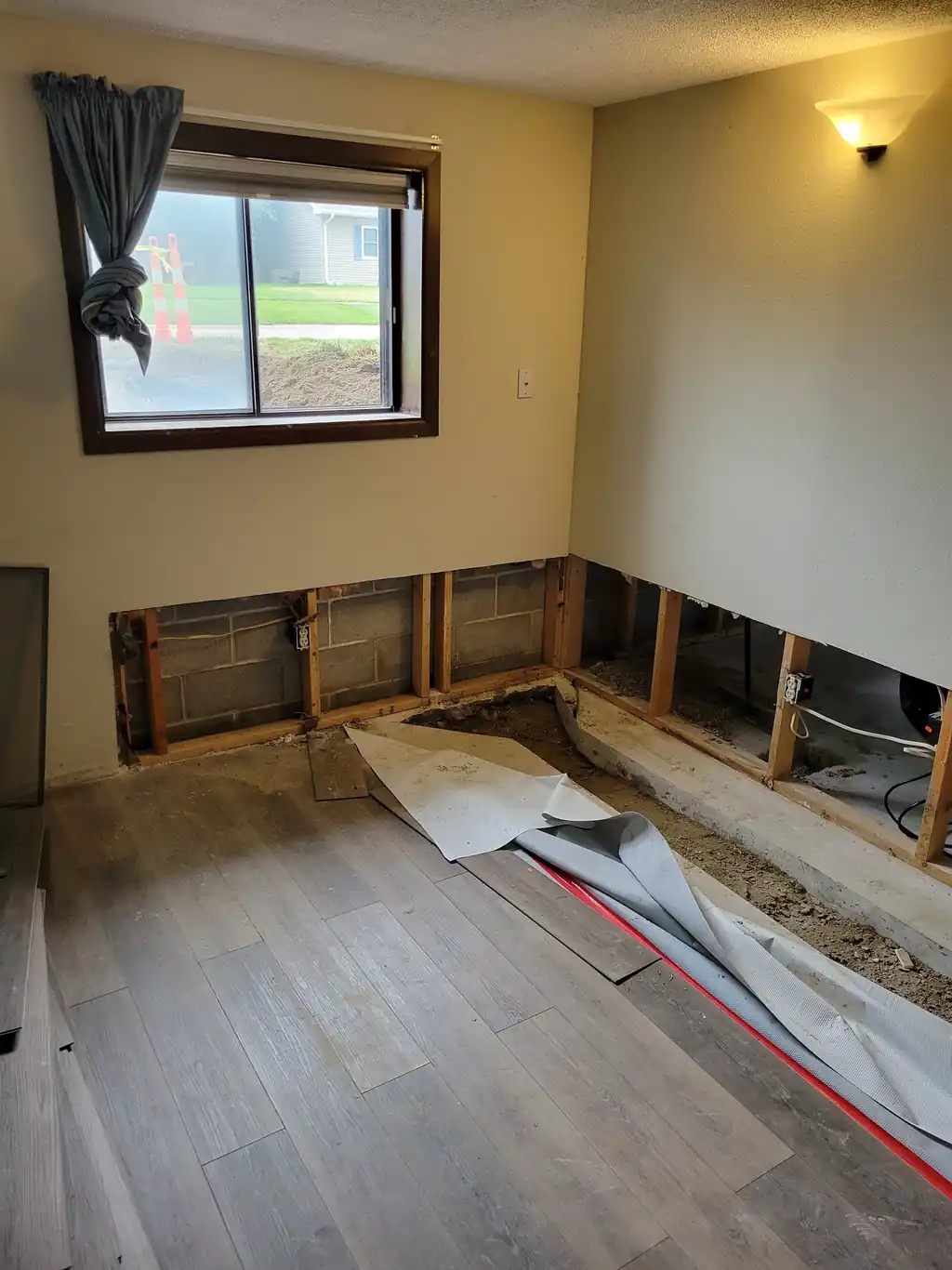
Winter out here doesn't ease into cold the way it does in milder climates. It drops fast, it stays hard for stretches, and pipes that have run fine for years can freeze or fail in a single overnight cold snap. Most burst pipe calls we get in Central Nebraska aren't from pipes that were already failing. They're from pipes that were fine until the ground and the walls around them got cold enough, for long enough, that something finally gave.
The signs that mean something's already wrong
A burst or a serious leak rarely announces itself with a flood right away. More often it shows up as a handful of smaller signs, and by the time you notice them, water has usually already been moving somewhere behind a wall or under a floor for a while. Here's what to watch for:
- A sudden drop in water pressure, especially if it happens across more than one fixture at once
- Water stains that show up on a wall or ceiling, or stains that seem to be slowly spreading
- Unusual sounds coming from your plumbing, banging, hissing, or a running sound with no fixture in use
- A water bill that jumps with nothing in your household use to explain it
- A damp, musty smell settling into a room that didn't have one before
Any one of these on its own is worth a look. More than one at the same time is a strong signal there's an active leak somewhere in the system, frozen or otherwise, and it's worth getting ahead of before it becomes visible water damage.
What to do in the first ten minutes
If you can see or hear water where it shouldn't be, the first move is always the same: get to your main shut off valve and kill the water supply to the house. That single step does more to limit damage than anything else you can do before help arrives, because it stops the volume of water moving through whatever has failed. If you don't already know where your main shut off is, it's worth finding it now, on a calm day, rather than during an emergency at eleven at night.
After the water's off, turn off power to any electrical fixtures or outlets in the affected area if you can do so safely, and start moving anything valuable away from standing water or a wet ceiling. Don't try to thaw a frozen pipe yourself with an open flame, and don't run hot water through a line you suspect has already split, since that just adds more water to whatever's already escaping. From there, it's a call to us. We've responded to water emergencies on weekends and outside normal hours when the situation called for it, because a burst line doesn't wait for business hours to happen.
Frozen line or failed line: they're not the same fix
A pipe that's frozen but hasn't split yet is a different job than a pipe that's already failed, and the right approach depends on which one you've actually got. A frozen line that's still intact usually just needs a careful, controlled thaw and a pressure test afterward to confirm nothing cracked while it was frozen. A line that's already split or separated needs the damaged section identified and replaced, and running water through it before that happens just makes the water damage worse. We use leak detection and camera work to find out which situation we're actually looking at before anything gets opened up, so the repair matches the pipe and the property isn't cut open any more than it needs to be. That distinction matters a lot in a Central Nebraska winter, where a line can freeze solid more than once in a season without ever splitting, right alongside a line that fails outright the first hard freeze it sees.
The water damage side
Once the water's stopped and the pipe issue is sorted, there's usually wet material to deal with, drywall, subfloor, insulation, whatever the leak reached before it was found. We handle mitigation on that material as part of the repair, and we work directly with insurance companies on the claim side when a homeowner needs that. We can't promise what a particular policy will or won't cover, that's between you and your carrier, but we can make sure the documentation from the repair is there when you need it for the claim.
We've been doing emergency plumbing work across Central Nebraska, out to about 60 miles from our base in Kearney, since 1997, and winter is when this kind of call comes in the heaviest. If you're seeing any of the warning signs above, or a line has already let go, get the water shut off first and call us from there. Weekday hours run 7am to 7pm, and we take Saturday appointments too.
All American Sewer & Drain, LLC, (877) 221-1856
Call (877) 221-1856More articles
How to Know Your Septic Tank Needs Pumping Before It Backs Up
The three to five year rule is real, but it's not the only clock running on your tank.
Tree Roots in Your Sewer Line: How They Get In and What Actually Clears Them
A root doesn't break into a pipe. It finds a place the pipe was already open.