Maintain
Septic Tank Cleaning and Maintenance
The tank cleaned out, not skimmed, on a maintenance program built around the interval that actually fits how the property is used.
Chapter 01
Every three to five years, and why that number
The guidance is straightforward, and it's the company's own: for optimal performance and longevity, a tank should be pumped every 3 to 5 years. It isn't an arbitrary round number, it's tied to how fast sludge builds up in a typically sized residential tank under ordinary Central Nebraska household use.
Sludge depth is the real trigger underneath that interval. The years-based number exists so a homeowner has a way to plan the visit before the depth becomes the thing that tells you, usually with a slow drain or standing water over the field.
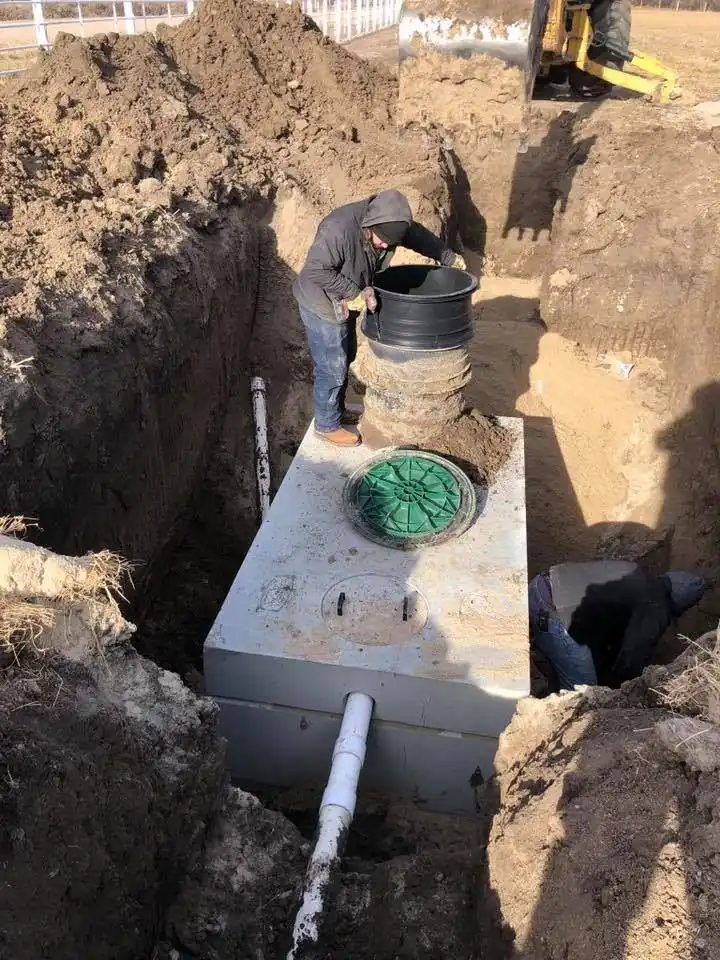
A concrete septic tank set in a trench with the riser being stacked onto the lid
Removing the buildup properly
The tank gets cleaned out, not skimmed. Both the settled solids at the bottom and the floating layer at the top come out, not just whatever sits easiest to reach near the access lid.
What gets left behind is what sets the clock running on the next visit. A tank that's been properly cleaned buys the full interval. One that's been skimmed buys considerably less, whether or not the paperwork says the same thing.
That's the difference between a maintenance visit and a visit in name only.
Chapter 03
A maintenance program rather than a callback
Maintenance programs exist to keep a system running efficiently between the emergencies, scheduled visits set on the interval that fits the property rather than waiting for a call that starts with a backup already in progress.
Across a 60-mile radius from Kearney, scheduled beats emergency on a septic system every time. A planned cleaning is a routine stop on the route. An emergency backup is a Saturday and a mess to clean up first.
What we check while the lid is off
The lid coming off is also the only time anyone gets eyes on the baffles, the inlet and outlet, and the sludge and scum layers directly, so that look happens every visit rather than only once something's already gone wrong.
Whether the field is still taking water at a normal rate gets checked too. A tank that's clean but sitting in front of a saturated field is a different problem, and it's worth knowing about before it becomes the reason for the next call.
All American Sewer & Drain, Licensed septic installer and pumper, NDEE #C1235. Call (877) 221-1856.