What a Drain Field Actually Does, and How to Tell Yours Is Wearing Out
The tank gets all the attention. The field is doing the harder job.
September 9, 2026 · 3 min read
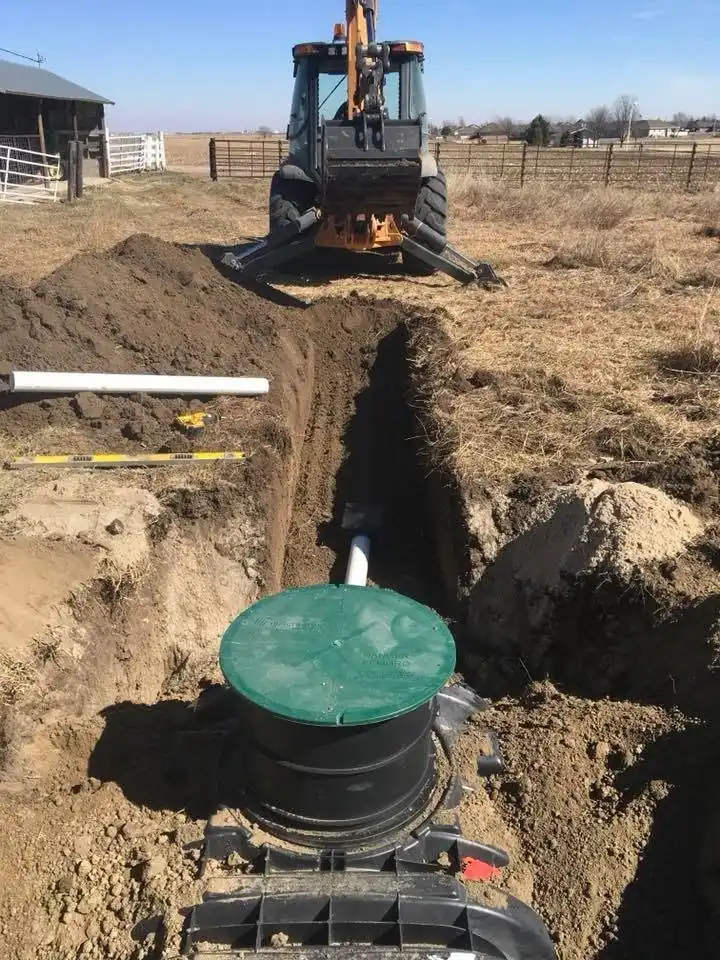
Ask most homeowners with a septic system what the drain field actually does and you'll get a vague answer, if you get one at all. The tank gets the attention because it's the part people picture, but the field is doing the more difficult job, and it's the part of the system that's genuinely hard to replace once it fails. Understanding what it's doing day to day makes it a lot easier to spot when something's going wrong before it turns into a full replacement.
What the field is actually for
Wastewater leaves the septic tank already partly treated, the solids have settled out and the tank has done its part, but the liquid still needs to go somewhere and finish being filtered. That's the drain field's job. It distributes that liquid across a network of buried lines, and the soil underneath does the final filtration as the water works its way down through it. A field that's designed and installed correctly spreads that load evenly across its full length, so no single section of the field is doing more work than the rest of it.
That last part matters more than people expect. A field that loads unevenly, whether because of poor original design or ground that's settled or shifted over the years, wears out the overloaded section fast while the rest of the field is barely being used. That's a design problem more than an age problem, and it's something we account for when we assess a property and lay out a new field. Soil absorption and the available run of usable ground decide the actual shape of a field. It's never a standard rectangle pulled off a shelf. Every property we install on gets assessed on its own terms before we design the layout.
What actually wears a field down
A drain field doesn't fail suddenly under normal use. It wears down gradually, usually from one of a few causes. The most common is a tank that's gone too long between pumpings, which lets solids escape past the tank and into the field itself. Once solids reach the field, they start clogging the soil pores that the system depends on for filtration, and that kind of clogging doesn't reverse on its own. Heavy vehicle traffic or construction over the field can compact the soil and crush the lines underneath, which is why we tell people never to park or drive over a field even though the ground looks like ordinary yard. And simple age plays a role too. Soil that's been filtering wastewater for decades eventually loses some of its absorption capacity even under otherwise ideal conditions.
Signs your field is telling you something
A field that's struggling usually shows it above ground before it fails outright. Standing water or unusually soggy soil over the field, especially in dry weather when the rest of the yard is dry, is one of the clearest signs. A strong sewage odor near the field is another. Grass that's noticeably greener and more lush directly over the field lines than the surrounding lawn is a subtler one, but it's a real signal, since it means the field is essentially over fertilizing that patch of ground with wastewater that isn't being absorbed the way it should be. Slow household drains that show up around the same time as any of these outdoor signs point at the field rather than just the tank.
When a field can be restored instead of replaced
A saturated or struggling field isn't always a full replacement. We use Soil Absorption Restorative and Salinatural on fields that are showing early signs of trouble, and in a lot of cases that's enough to bring the field's absorption capacity back without digging up the yard. That conversation happens before an excavator ever shows up on the property, because a restorative treatment is a fraction of the cost and disruption of a full field replacement, and it's worth ruling out first whenever the field's condition allows for it.
A new tank into a tired field doesn't solve much on its own either. The two are one system, and we look at both together rather than treating a tank issue and a field issue as separate problems. We've installed and serviced drain fields across Central Nebraska since 1997, on everything from in town lots to farm and acreage properties where septic is the only option, and if you're seeing standing water, odor, or unusually lush grass over your field, it's worth having us take a look before it turns into standing water in the house instead.
All American Sewer & Drain, LLC, (877) 221-1856
Call (877) 221-1856More articles
How to Know Your Septic Tank Needs Pumping Before It Backs Up
The three to five year rule is real, but it's not the only clock running on your tank.
Tree Roots in Your Sewer Line: How They Get In and What Actually Clears Them
A root doesn't break into a pipe. It finds a place the pipe was already open.